

Most cities have a nightlife district. Miami has a nightlife coastline. The night here does not gather on one street; it spreads out across Biscayne Bay, along Ocean Drive, and out toward the dark water where the city lights stop and the Atlantic begins. The heat finally breaks around nine, and the place exhales.
That geography changes how you should plan. In Miami, the smartest move is to treat the water as the main venue and the land as the after-party — not the other way around.
The night belongs to the bay
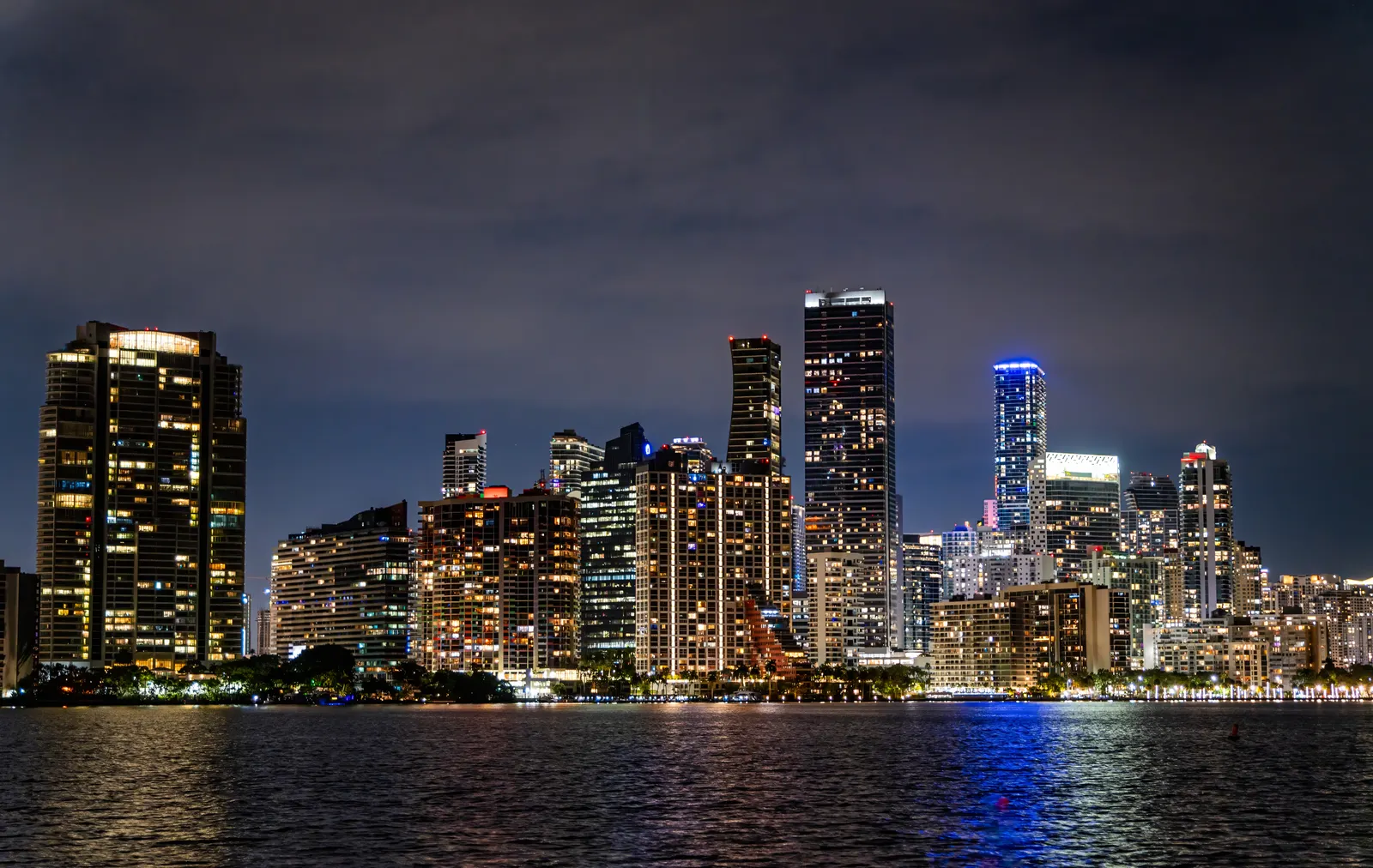
If you do one thing after dark in Miami, get on a boat. From the water, the downtown skyline does something it never manages from a sidewalk: it lines up into a single glittering wall, with the Star Island mansions glowing low on the right and cruise ships sliding out past South Beach. A party cruise on Biscayne Bay hands you a DJ, a dance floor and that skyline as a backdrop, with no cover charge and no cab fare between venues — the whole night is just the boat.
There are two flavors worth knowing. An adults-only party cruise with a DJ, a lit dance floor and two cocktails included leans into the dancing and the drinks — the club night, minus the cover charge and the cab. The two cocktails are built into the ticket, the deck is yours for the duration, and because it is 21-plus the crowd is there to go out rather than to sightsee, which is why it reliably turns into the loudest, loosest part of a night out on the bay. A breezier cruise past downtown and the Star Island mansions, drinks in hand leans into the views instead, holding close enough to the celebrity estates that people genuinely start guessing which house belongs to whom, with a looser crowd more interested in the cityscape than the bass. Better for the skyline than the dance floor, and the stronger first night on the water if you want to actually see the city before you commit to dancing on it.
South Beach has a darker guest list than it admits
The Art Deco district sells you pastel and palm trees, but its history runs colder than the mojitos. On the steps of his own mansion on Ocean Drive, designer Gianni Versace was shot dead in July 1997 by a spree killer who then vanished for days, ending a manhunt that gripped the country. The hotels along Collins Avenue have their own permanent guests, the kind the front desks do not list. Prohibition-era rum-runners used these beaches as the last stop before the bottles came ashore.
An adults-only haunted pub crawl through four South Beach bars works that seam, threading from Lummus Park toward Ocean Drive with stories of mobsters, murder and the spirits said to linger in the Deco hotels between rounds. Four bars in one guided run means the route and the order are already sorted — you drink in the rooms with the actual stories attached rather than whichever patio is closest, and the guide fills the walks between with the crimes the pastel was painted over. It is the history of the strip the postcards leave out, built for a crowd that wants the night out and the darker backstory in the same ticket, and it sobers you up about as fast as the drinks loosen you.
Prefer the chill without the drinking? A straight walking ghost tour of haunted South Beach covers the same ground — the Deco hotels, the crimes behind the pastel — at a walking pace with no bar tab, which makes it the better pick for an early-evening cool-down, for travelers who do not drink, or for anyone who wants the history without the hangover before the bars heat up.
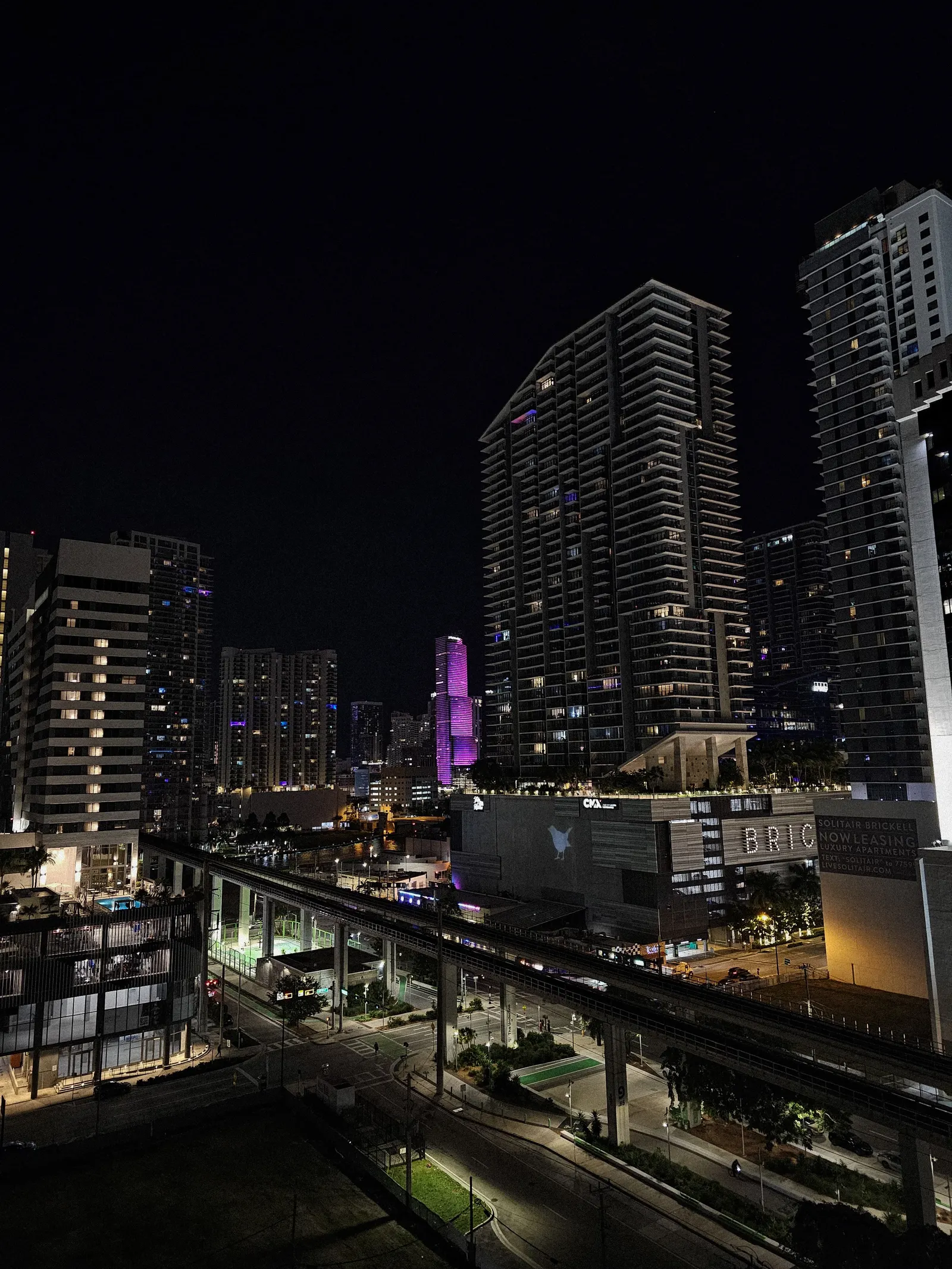
The full sequence: water, then land
For the complete Miami night, there is a package that does the handoff for you, boat party first and VIP club entry second — a boat party on the bay that rolls straight into a South Beach club once you are back on dry land. The reason to book the combined ticket rather than wing it is the door: South Beach club entry is the single hardest, most expensive part of a Miami night to arrange cold, and this skips it, walking your group past the line on VIP entry that is already paid for. The water leg warms up the crowd while the skyline slides past; the club leg keeps it going past two without anyone standing on Collins Avenue negotiating a cover. Two nights in one ticket, built for groups who would rather not spend the evening reading door policies — and the closest thing Miami has to a guaranteed good night.
The Miami most visitors never see
South Beach is the postcard, but the city’s most interesting nights happen off it. Little Havana on Calle Ocho runs late and loud in a way the Beach does not — domino tables under the lights at Máximo Gómez Park, cigar rollers still working, ventanitas selling cortaditos to people who have clearly not been to bed. Wynwood, the old warehouse district, turns its murals into a different show after dark, when the galleries pour wine and the street art glows under spotlights. Neither shows up on the average first-timer’s itinerary, and both are better for it.
Then there is the water’s stranger history. Out in Biscayne Bay sits Stiltsville, a cluster of wooden houses built on pilings a mile offshore in the 1930s — a Prohibition-era gambling and drinking refuge beyond the reach of the mainland police, now down to a handful of weathered survivors that the party boats still pass on the way out. It is the perfect symbol of how Miami has always done its nightlife: just past the rules, out where the lights of the city become a backdrop rather than a spotlight.
Understanding that is the key to the city after dark. Miami has never been a one-neighborhood town with a single main strip. It is a scatter of scenes — the Beach, the bay, Havana, Wynwood, the Design District — each running its own clock, connected by a fifteen-minute rideshare. The visitors who have the best nights here treat that as a feature, not a logistics problem, and let the night move between them.
When you come matters more than where you go
Miami is the rare American nightlife city where the calendar can make or break the trip, and most first-timers do not factor it in. The sweet spot runs from roughly November through April: warm but not punishing after dark, low humidity, calm water for the cruises, and the whole season of the city’s biggest events stacked into it. Come in the depths of summer and the equation changes — the heat barely drops at night, afternoon storms can scrub a sailing, and from late summer into autumn the city sits inside hurricane season, which is less about constant danger than about weather that swings and plans that need a backup.
The events are worth building a trip around if the dates line up. Miami Music Week and the electronic-music gatherings that cluster in late March turn the whole city into one rolling party for days. Art Basel in early December does the same for the design and gallery crowd, and Wynwood and the Design District run later and louder all week. Even outside the marquee weekends, winter is simply when the bay is calmest and the open-deck cruises are at their best. If you have any flexibility, point the trip at the cooler half of the year — the difference between a January night and an August one in Miami is not subtle, and it decides how much of the water you actually get to use.
How to play it
Book the water for the early-to-mid evening, when the skyline is freshly lit and the bay is calm; save South Beach for late, because it does not really wake up until midnight. Dress lighter than you think — the humidity does not quit after sunset — and if you are prone to seasickness, the bigger party boats are far steadier than the small ones. Above all, book the cruises ahead; the good sailings fill on weekends and walk-up rarely works.
Book the night
Live prices and availability open on each partner site. We may earn a commission, at no extra cost to you.
Each experience links to a vetted booking partner for live sailings and prices. See the full Miami after dark guide, or weigh it against the desert in Las Vegas vs Miami after dark.